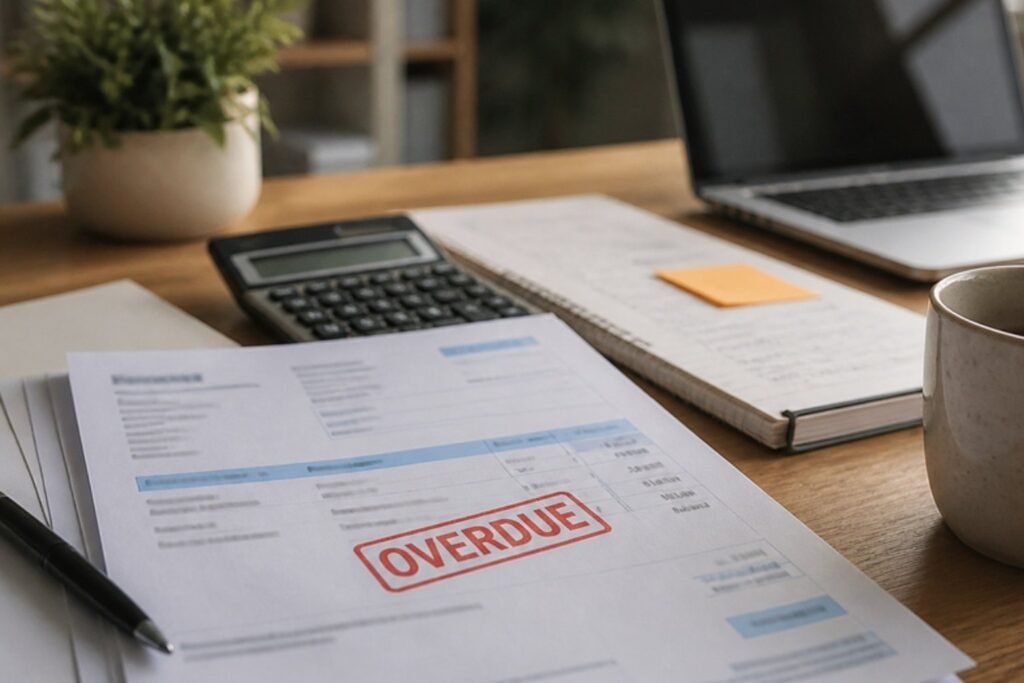
Most small businesses that sell on credit eventually have a customer who never pays. When you have tried to collect and the money is clearly not coming, the unpaid amount becomes a bad debt. Writing it off keeps your books honest, and in some cases it can also reduce your taxes.
This guide explains what counts as a bad debt, how to record a write-off, and when the IRS lets a business deduct it.
What Is a Bad Debt?
A bad debt is money owed to your business that you do not expect to collect. For small businesses, it usually starts as an unpaid customer invoice in accounts receivable.
The IRS describes a business bad debt as a loss from the worthlessness of a debt that was created or acquired in a trade or business. Examples include credit sales to customers, loans to clients, suppliers, or employees, and business loan guarantees.
When Is a Debt Considered Uncollectible?
There is no single number of days after which a debt becomes bad. You need reasonable evidence that it will not be paid. Signs include:
- The customer has stopped responding after repeated reminders.
- The customer has closed the business or filed for bankruptcy.
- A collection agency could not recover the amount.
According to IRS Topic No. 453, you must show that you took reasonable steps to collect. You do not have to go to court if you can show that a judgment would be uncollectible.
How to Record a Bad Debt Write-Off
There are two common ways to handle bad debts in your books.
The Direct Write-Off Method
Many small businesses record the expense when a specific invoice is confirmed uncollectible. Example (hypothetical): A customer owes $1,200 and the debt is now worthless.
| Account | Debit | Credit |
|---|---|---|
| Bad Debt Expense | $1,200 | |
| Accounts Receivable | $1,200 |
This method is simple and matches how bad debts are generally handled for federal tax purposes, where a business deducts a debt when it becomes worthless.
The Allowance Method
Larger businesses, and businesses that follow generally accepted accounting principles, often estimate future bad debts in advance. They record an Allowance for Doubtful Accounts, a contra-asset that reduces accounts receivable on the balance sheet. When a specific invoice proves uncollectible, they charge it against the allowance. An estimate like this is generally not deductible for taxes until specific debts actually become worthless, so ask your accountant how to handle the difference.
Whichever method you use, record write-offs with a clear journal entry and keep notes on why the debt was written off.
Can You Deduct Bad Debt on Your Taxes?
Sometimes. The key rule is that you can deduct a business bad debt only if the amount was already included in your income, in the current year or an earlier one.
- Accrual-method businesses record revenue when they send an invoice. That revenue has already been counted as income, so an uncollectible invoice can generally be deducted.
- Cash-method businesses record income only when they are paid. An unpaid invoice was never counted as income, so the IRS says cash-method taxpayers generally cannot deduct unpaid amounts for items like fees, rents, or wages.
If you are not sure which method you use, read cash basis vs. accrual accounting.
Business bad debts can be deducted when they are wholly or partly worthless. Sole proprietors report them on Schedule C. Other business types use their own business tax return.
Loans Must Be Real Loans
If the bad debt is a loan rather than an unpaid invoice, the IRS says you must be able to show that you intended to make a loan at the time, not a gift. A written agreement, a repayment schedule, and records of any payments help support this.
What If the Customer Pays Later?
Sometimes a written-off customer pays after all. In your books, reverse the write-off by restoring the receivable, then record the payment. If you deducted the bad debt on a prior tax return, the recovered amount may need to be included in income in the year you receive it. Ask your tax professional how to report it.
How to Reduce Bad Debts
- Set clear payment terms before you start work.
- Send invoices promptly and follow up on late ones.
- Ask for deposits on large jobs.
- Review an aging report every month and act early on overdue balances.
Records to Keep
- The original invoice or loan agreement.
- Copies of reminders, emails, and collection letters.
- Any bankruptcy notice or collection agency report.
- The date and reason you decided the debt was worthless.
Frequently Asked Questions
Can a cash-basis business deduct unpaid invoices?
Generally, no. Because the income was never reported, there is nothing to deduct. The IRS rule requires the amount to have been included in income first.
Do I have to sue a customer before writing off the debt?
No. The IRS says going to court is not required if you can show a judgment would be uncollectible. You do need to show reasonable collection efforts.
Where do I deduct a business bad debt?
Sole proprietors use Schedule C. Partnerships, corporations, and other entities use their business tax return.
Conclusion
Writing off a bad debt keeps your receivables realistic and your profit accurate. Record the write-off when a debt is truly uncollectible, keep proof of your collection efforts, and remember that a tax deduction is generally available only if the amount was counted as income first. When the amount is large or the situation is unclear, talk to a tax professional.